Blog

  • NAFDAC Shines in London as DG Bags Prestigious Int’l Award

    NAFDAC Shines in London as DG Bags Prestigious Int’l Award


    – I accept this honour not for myself alone, but on behalf of the dedicated men and women of NAFDAC whose tireless work makes every achievement attributed to my leadership possible,” – Prof. Adeyeye


    – Exhibiting uncommon humility, Prof. Adeyeye declares; ”This recognition belongs to every member of the NAFDAC family.”


    By Biola Lawal
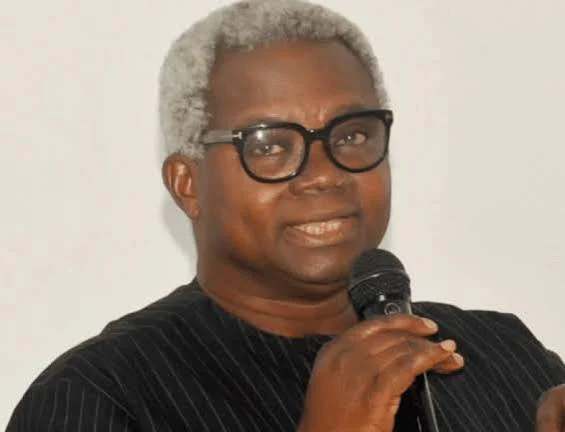
    FLOWERBUDNEWS: Nigeria’s Prof. Mojisola Christian Adeyeye, the Director General of the National Agency for Food and Drug Administration and Control (NAFDAC), has been conferred with the prestigious Special African Leadership Commendation Award.

    Prof. Adeyeye bagged the honour at the 16th African Business Leadership Awards (ABLA) in London, United Kingdom, for transforming Nigeria’s pharmaceutical regulatory system into a global benchmark.

    The award ceremony, which brought together heads of state, ministers, parliamentarians, and Africa’s most distinguished business and public sector leaders, was held at the historic Cholmondeley Room and Terrace, House of Lords, Palace of Westminster, London, on 3 July 2026.

    The recognition, conferred by the Global Advisory Board of the African Leadership Organisation (ALO), the publisher of African Leadership Magazine, was awarded following a rigorous, merit-based screening and vetting process spanning several years, during which Prof. Adeyeye’s leadership trajectory and institutional impact were independently tracked and assessed by an international panel.

    The award tells a story that every Nigerian should know. When Prof. Adeyeye assumed office as Director General of NAFDAC on 30 November 2017, she inherited an agency in deep institutional distress, a statement on the historic event disclosed.

    It recall further:
    The agency carried a debt burden of over ₦3.2 billion. Between 70 and 80 per cent of the equipment across NAFDAC’s seven laboratories was non-functional.

    There were no vehicles for inspection. Staff morale had collapsed under repeated industrial strikes. No Director had a NAFDAC-issued laptop. Digitisation was non-existent. And on the World Health Organisation’s Global Benchmarking scale of one to four, NAFDAC was rated below Level One. One international observer had described the agency bluntly as a “good-for-nothing agency.”

    Less than a decade later, the same agency stands as one of the most credible regulatory bodies on the African continent.

    Through fiscal discipline alone, Prof. Adeyeye cleared the inherited debt of over ₦3.1 billion within her first year in office, discovering in the process that ₦200 million of that debt was fictitious. She procured over 150 utility vehicles, invested over ₦7 billion in laboratory equipment, and equipped more than half of NAFDAC’s 2,000-plus workforce with laptops and desktop computers.

    She digitised 90 per cent of the agency’s regulatory processes, instituted standard operating procedures across all functions, and pursued ISO 9001 certification, which NAFDAC achieved by 2019 and has maintained through recertification to date.

    The global recognition that has followed is remarkable by any standard.

    NAFDAC attained WHO Global Benchmarking Maturity Level 3 in March 2022, a distinction held by only 35 per cent of regulatory agencies worldwide, and was successfully re-benchmarked in June 2025.

    The Central Drug Laboratory in Lagos achieved WHO Prequalification in September 2023.

    Nigeria attained Pre-Accession Pre-Applicant status in the Pharmaceutical Inspection and Cooperation Scheme (PIC/S), a membership shared by only 50 countries globally.

    In 2025, Nigeria became the 24th member of the International Council for Harmonisation (ICH), one of only 25 members among 194 regulatory agencies worldwide.

    Through the Five Plus Five regulatory directive, Prof. Adeyeye drove a 70 per cent reduction in the importation of pharmaceuticals already being manufactured in Nigeria, significantly strengthening the domestic pharmaceutical industry.

    International pharmaceutical companies that left Nigeria in 2017 are now investing and reinvesting in the country, bringing technology transfer and global partnerships.

    NAFDAC is now working towards WHO Maturity Level 4 and World Listed Authority status, milestones that would enable medicines manufactured in Nigeria to be traded freely across the African continent and globally, positioning Nigeria as a pharmaceutical export nation of international standing.

    The two-day ABLA programme, themed “From Vision to Velocity: Driving Africa’s Next Wave of Growth and Leadership,” was held across two iconic London venues.

    Day One took place at the GMT Suite, Hilton London Metropole, where Prof. Adeyeye delivered a keynote address on “The African University of the Future: Innovation, Relevance, and Global Competitiveness,” calling for the urgent alignment of African university curricula with global regulatory standards and the integration of digitisation across all academic disciplines. Her address drew wide commendation from the assembled leaders.

    Day Two, the awards ceremony at the House of Lords, was hosted by Baroness Sandy Verma, with Lord Dolar Popat and Baroness Lindsay Northover attending as special guests.

    The ALO International Advisory Council, chaired by H.E. Jakaya Mrisho Kikwete, former President of the United Republic of Tanzania, was represented by H.E. Chief Dr. Jewel Howard Taylor, former Vice President of Liberia, Gen. William Kip Ward, First Commander of US Africa Command, Hon. Nomvula Mokonyane, former Premier of Gauteng and Deputy Secretary General of the African National Congress of South Africa, and Dr. Victor Oladokun, Communications Advisor to the President of the African Development Bank, among others.

    Speaking after receiving her award, Prof. Adeyeye said:

    “I accept this honour not for myself alone, but on behalf of the dedicated men and women of NAFDAC whose tireless work makes every achievement attributed to my leadership possible.

    When I assumed office in November 2017, NAFDAC was rated below the first rung of the WHO Global Benchmarking ladder.

    Today, we stand at Maturity Level 3, successfully re-benchmarked in June 2025, a distinction held by only 35 per cent of regulatory agencies worldwide.

    This recognition belongs to every member of the NAFDAC family.” FLOWERBUDNEWS)

  • South Africa Is Playing with Fire, and Its Elites Are Holding the Match

    South Africa Is Playing with Fire, and Its Elites Are Holding the Match

    South Africa Is Playing with Fire, and Its Elites Are Holding the Match

    By Prof. Chiwuike Uba

    South Africa is not merely “facing challenges.” It is staging a slow-burning political crisis, one that is being rationalised as dysfunction but increasingly resembles a struggle for power conducted through disorder. The polite language of governance failure no longer captures what is unfolding. This is not drift. It is pressure, calculation, and in some quarters, strategy.

    For too long, analysts have hidden behind safe explanations such as unemployment, inequality, and historical injustice. All are true. All are insufficient. These are the dry leaves on the ground. What demands attention now is who is striking the match, who is fanning the flames, and who is quietly benefiting as the fire spreads.

    Make no mistake, South Africa is burning in ways that are politically useful.

    At the heart of this crisis lies a fractured elite compact. The old order has not fully collapsed, but it no longer commands coherence or loyalty. What has emerged instead is a contested arena where competing factions are probing the limits of the state, testing how far instability can be stretched before it snaps, and calculating how to convert public anger into political capital.


    This is where the conversation becomes uncomfortable.

    There is a growing, if often whispered, belief that networks aligned with former power structures have not retreated into history but have recalibrated. Their strategy is not necessarily to govern well, but to demonstrate that others cannot. In such a playbook, instability is not a failure. It is evidence. Every episode of unrest becomes a message that the current order is weak, ineffective, and incapable. The longer the system appears broken, the stronger the case for its replacement.

    This is not about nostalgia. It is about the weaponisation of comparison. If the present can be made to look chaotic enough, the past, however flawed, begins to resemble order.

    But this is only one side of the fire.


    The second lies in South Africa’s deeply entrenched economic structure, where power has proven far more resilient than politics. Decades after apartheid, economic control remains heavily concentrated, and with it comes influence that is subtle, indirect, but decisive. In this environment, a weakened state is not necessarily a threat to all actors. For some, it is an opportunity.

    A government that cannot enforce rules consistently creates room for those who can operate outside them. A state that struggles to regulate becomes easier to navigate, easier to influence, and easier to bypass. When governance falters, power does not disappear. It relocates.


    Here lies the uncomfortable convergence. Political factions seeking relevance and economic actors seeking advantage do not need to coordinate to produce the same outcome. Their interests align in the erosion of state authority. One seeks to reclaim power. The other seeks to reshape it. Both benefit when the centre cannot hold.

    The consequences of this convergence are visible in the streets.

    Xenophobic violence in South Africa is often explained away as the rage of the excluded. That explanation is convenient. It absolves the system. It localises the problem. It turns a structural crisis into a community issue.


    But the persistence, recurrence, and sometimes chilling coordination of these attacks suggest something deeper. Anger may be organic, but its direction is not always so. When violence repeatedly targets the same vulnerable groups, when it erupts in patterns that defy coincidence, and when it is met with inconsistent state response, it ceases to be merely social. It becomes political.

    Xenophobia, in this context, is not just prejudice. It is diversion.

    It redirects legitimate frustration away from structural failure and toward those least able to defend themselves. It fractures the solidarity of the poor, ensuring that those who should be united in demanding accountability are instead divided by fear and suspicion. It creates chaos that can be cited as evidence of national breakdown.


    Perhaps most dangerously, it normalises violence as an acceptable language of grievance.

    Then there is the state’s response, or lack of it.

    A capable state does not eliminate violence entirely, but it responds decisively, predictably, and without bias. South Africa’s response has too often appeared hesitant, uneven, and opaque. Law enforcement oscillates between presence and absence. Administrative systems, particularly in immigration, are plagued by delays and inconsistencies that deepen vulnerability and fuel resentment.

    Are these failures of capacity, of leadership, or of intent?

    At this point, the distinction is becoming less important. In politics, perception hardens into reality. The prevailing reality is that the state appears either unwilling or unable to act with authority.


    That perception is corrosive.

    It erodes trust not only among citizens but across constituencies that already view each other with suspicion. Black South Africans see a state that has failed to deliver economic justice. White South Africans see a state that appears unstable and unpredictable. Migrants see a state that cannot or will not protect them. Each narrative reinforces the other, creating a feedback loop of distrust.

    This is how legitimacy collapses. Not in a single dramatic moment, but in a thousand small fractures.

    At the centre of it all sits a presidency that increasingly looks like a referee in a game where the players no longer respect the rules. Every move is second-guessed. Every delay is amplified. Every action is interpreted through the lens of weakness.

    This is not merely a leadership problem. It is a structural trap. Govern too cautiously and you appear indecisive. Act too forcefully and you risk triggering backlash from powerful interests. In such a system, even competence can be framed as failure.

    Politics does not reward nuance. It rewards perception.


    The perception being crafted, deliberately or otherwise, is that South Africa is ungovernable.

    That perception is not neutral. It is an argument. It is a campaign message without a slogan. It prepares the ground for what comes next, the battle for succession.

    This will not be an ordinary political contest. It will be a struggle over the meaning of the crisis itself. Is South Africa failing because reform has been too slow, or because it has been misguided? Does the solution lie in strengthening institutions, or in bypassing them?

    Expect the answers to be loud, emotional, and deeply polarising.

    Populist forces will promise order through strength, clarity through simplicity, and justice through immediacy. Reformist voices will argue for patience, rebuilding, and restoring credibility step by step. Meanwhile, political outsiders will position themselves as alternatives to a system many citizens no longer trust.

    In a stable environment, these debates would unfold within institutional guardrails. In the current climate, those guardrails are weakening.

    That is where the real danger lies.

    When political competition takes place in an environment of normalised disorder, the incentive shifts. It is no longer enough to win votes. One must shape the conditions under which voting occurs. Instability becomes a variable to be managed, and in some cases, manipulated.

    This is how democracies begin to corrode from within.


    The implications extend far beyond South Africa.

    Economically, the country is not just another market. It is a continental anchor. Its financial systems, industrial base, and regional linkages make it central to African growth. Prolonged instability would ripple outward, constraining trade, deterring investment, and weakening regional integration.

    Politically, South Africa has long been seen as a model of democratic transition and constitutionalism. If that model begins to fracture, it sends a powerful signal across the continent. It emboldens those who argue that institutional democracy cannot deliver, and it weakens reformist voices elsewhere.


    Diplomatically, the stakes are equally high.

    Xenophobic violence is not a domestic issue when it targets foreign nationals. It is an international concern that tests regional solidarity and diplomatic patience. Each episode forces other African governments to respond, balancing domestic outrage with the need to preserve bilateral relations.


    Over time, that balance becomes harder to maintain.

    It also raises serious questions under international law. The protection of non-nationals is a clear obligation, not a discretionary act. Persistent failure to uphold this responsibility undermines both legal commitments and diplomatic credibility.

    South Africa, once a moral voice in global affairs, risks appearing increasingly inconsistent if its domestic realities contradict its international posture.

    And here is the most provocative question of all.

    What if the crisis is not being solved because, for some, it is not a problem to be solved?

    What if instability has become too useful?

    Too useful for those seeking to discredit incumbents.
    Too useful for those seeking to renegotiate economic power.
    Too useful for those preparing to present themselves as the only solution to a crisis they did not prevent.

    If that is even partly true, then South Africa is not merely in trouble. It is in a contest where disorder has become currency.


    Yet even now, the outcome is not fixed.

    South Africa still possesses institutions that function, even if imperfectly. Its judiciary has demonstrated resilience. Its civil society remains active. Its citizens, despite frustration, are not disengaged.

    But these strengths cannot remain passive.

    What is required now is decisive action that breaks the cycle of perception. Law enforcement must act with clarity and consistency. Administrative systems must demonstrate competence. Political leadership must communicate intent and back it with visible results.

    Above all, the narrative must change. Disorder must no longer define the country’s identity or its future.


    Because if the current trajectory continues, South Africa risks crossing a threshold where instability is no longer a phase, but a permanent feature. And once a system internalises disorder as normal, reversing it becomes exponentially harder.

    This is not a moment for polite analysis. It is a moment for honesty.

    South Africa is playing with fire.

    Unless those holding the match are confronted, whether they are political actors, economic elites, or compromised institutions, the blaze will not remain contained.

    It will consume far more than those who believe they can control it.


    About the Author: Prof. Chiwuike Uba, Ph.D., is a Professor of Economics and a governance and public financial management expert with over two decades of experience in public sector reforms, development policy, and institutional analysis across Africa. He is the Chairman of the ACUF Initiative for Policy and Governance, and has consulted for national governments, multilateral institutions, and international development partners. His work focuses on the intersection of political economy, accountability, and sustainable development.

  • NATOP unveils first national secretariat, sets stage for landmark 10th AGM

    L-R: Ikechi Uko, member ,NATOP BOT; Bolaji Mustapha,  NATOP President; Permanent Secretary, Lagos State Ministry of Tourism, Arts and Culture, Mr. Bopo Oyekan-Ismaila and Nkereweum Onung,  Chairman BOT of NATOP at the event.
    Lagos— The Nigeria Association of Nigeria Tour Operators (NATOP) has unveiled its first-ever National Secretariat as a new chapter for Nigeria’s tour operating industry and a strategic step toward strengthening domestic tourism, promoting professionalism and expanding collaboration across the sector.

    The secretariat, located at 13, Osho Street, Opebi Link Bridge, Ikeja, Lagos, was officially inaugurated on Wednesday ahead of NATOP’s 10th Annual General Meeting (AGM), scheduled to hold from July 8 to July 12, 2026.

    The facility provides members with workstations, meeting spaces, a conference room and an integrated tourism experience centre designed to support business, networking and leisure.

    Speaking at the unveiling, the Permanent Secretary, Lagos State Ministry of Tourism, Arts and Culture, Mr. Bopo Oyekan-Ismaila, described the secretariat as an innovative space that would encourage more residents and visitors to experience tourism within Lagos.

    “It’s going to help promote domestic tourism and community tourism a lot,” she said.

    According to her, the facility combines wellness, culinary and business experiences under one roof, making it attractive for people seeking relaxation without leaving the city.

    “When you’re busy or you feel stressed, come and de-stress here.

    “It’s a place to be. I’m really very happy to be here. It’s so lovely. Fantastic idea.”

    NATOP President, Mrs.Bolaji Mustapha, said the unveiling marked a historic achievement for the association, which is establishing a national secretariat for the first time since its inception.

    “This is the first time in history that NATOP is having a secretariat.

    “The essence is for us to be visible so that they know where to locate us.

    “We need a location and I pray that by the grace of God we have our own permanent site where we’ll be located but this is the beginning,” she said.

    Mustapha explained that beyond serving as the association’s operational base, the facility would provide members with workstations for business activities, private meeting lounges and a conference room that could be rented for meetings and events.

    She said the initiative would also generate income to support NATOP’s activities while enhancing tourism promotion through the experience centre.

    She said the secretariat would also help tackle quackery within the tour operating business by promoting professionalism and encouraging practitioners to acquire the necessary training.

    “When NATOP is visible, other quacks will no longer have any option than to fall in line, do their business professionally.

    “NATOP is strictly for professionals, that’s why we’re positioning ourselves to say come on, let’s train you to be a professional, and clients should actually align to deal with professionals only.”

    Looking ahead, Mustapha said the association would deepen partnerships with foreign embassies to help identify genuine tour operators, while also working more closely with federal and state governments to develop tourism sites across Nigeria.

    She added that NATOP remained committed to establishing a larger permanent headquarters that could host visitors and support more industry activities.

    NATOP Board of Trustees Chairman, Mr Nkereuwem Onung, described the opening of the secretariat as a defining moment in the association’s evolution.

    “The opening of this secretariat signifies a whole lot.

    “One it signifies stability, it signifies structure, and it gives credence to the future,” Onung said.

    Recalling the association’s early years, he noted that previous leaders worked without a permanent office and commended the current leadership for turning the vision into reality.

    He said the development would further strengthen domestic tourism and destination marketing, urging state governments to continue partnering with NATOP to showcase Nigeria’s tourism assets.

    He also noted that the association’s Annual General Meeting has rotated among states over the past decade, with Lagos hosting the event for the second time since 2017.

    The unveiling of the National Secretariat sets the tone for NATOP’s 10th AGM, which will bring together tour operators, tourism stakeholders, policymakers and development partners from across the country to deliberate on the future of Nigeria’s tourism industry and strengthen collaboration for sustainable sector growth.

  • Don advocates better maintenance of medical equipment

    Don advocates better maintenance of medical equipment


    By Aderogba George

    Abuja:  Prof. Daprim-Samuel Ogaji of the University of Port Harcourt has called on the Federal Government to establish a sustainable system for maintaining medical equipment to improve healthcare delivery.

    Ogaji, Director of the Africa Centre of Excellence in Public Health and Toxicology Research (ACE-PUTOR), made the call on Wednesday in Abuja at the 11th Scientific Conference and Annual General Meeting of the Intensive and Critical Care Society of Nigeria (I-CCSN).

    The conference has as its theme, “Sustainable Financing for Intensive Care Units (ICUs) in Public Health Facilities: Challenges, Opportunities and Solutions.”

    It also features sessions on data in critical care, sepsis management in Nigeria and mechanical ventilation in low-resource settings.

    Ogaji said a structured maintenance system had become imperative because of the high cost of medical equipment and the need to ensure optimal use of available resources.

    He said every Nigerian should have access to critical healthcare services whenever needed, irrespective of economic status.

    “As policymakers and decision-makers, we must make healthcare accessible to the people.

    “The financial burden of illness is often unexpected. Therefore, we must build an efficient health system as one of the outcomes of this conference,” he said.

    According to him, government budgets at the federal and state levels remain the major source of healthcare financing.

    He said inadequate funding had serious consequences for patients and public health facilities.

    “Sustainable financing means providing adequate funding consistently, year after year.

    “Government must ensure that the healthy and wealthy cross-subsidise care for the sick and the poor, while increasing health sector allocations at both federal and state levels.

    “There must be deliberate policies to make Public-Private Partnerships (PPPs) work, while the Federal Ministry of Health should establish systems that support effective service delivery.

    “We must also integrate intensive care services into Nigeria’s Universal Health Coverage (UHC),” he said.

    Earlier, the President of I-CCSN, Dr Job-Gogo Otokwala, called for dedicated and protected funding for intensive care services in public health facilities.

    He also urged hospital management to invest strategically in infrastructure, equipment maintenance, workforce retention and clinical governance.

    “We seek enduring partnerships with development partners and industry to support research, innovation, education and sustainable capacity development,” Otokwala said.

    Also speaking, Chairman of the Local Organising Committee, Dr Harrison Nwogu, said the society was proud to inaugurate the Maj.-Gen. Obashina Ogunbiyi Lecture Series.

    Nwogu commended the conference sponsors, collaborators and participants, as well as the conference chairman, Dr Olalekan Olatise, Medical Director of Zenith Medical and Kidney Centre, Abuja, for supporting the successful hosting of the event. (NAN) www.nannews.ng

  • UNICAL VC Reaffirms Commitment to Science, Innovation, Partnerships

    UNICAL VC Reaffirms Commitment to Science, Innovation, Partnerships


    By Bassey Asuquo

    The Vice Chancellor of the University of Calabar, Prof. Offiong Efanga Offiong, has reaffirmed the institution’s unwavering commitment to promoting scientific inquiry, driving innovation, and fostering strategic partnerships that advance national development and tackle contemporary global challenges.

    Prof. Offiong stated this at the University Senate Chamber while declaring open the 2nd Annual Conference of the Chemical Society of Nigeria, Cross River Chapter, 2026, with the theme _“Catalysing the Green Economy: Chemistry as a Driver for Sustainable Development in Nigeria”.

    This was disclosed in a statement by the University’s Public Relations Unit, a copy of which was made available to Flowerbudnews.

    Describing Chemistry as central to global sustainability efforts, the Vice Chancellor who was the Chief Host and Chairman of the Local Organizing Committee said the discipline remains at the forefront of providing innovative solutions in renewable energy, agriculture, healthcare, waste management, and industrial development as the world embraces environmentally responsible technologies.

    The Vice Chancellor emphasized that Nigeria’s push for economic diversification and sustainable growth hinges on innovation and technological advancement.

    He noted that chemists are pivotal to developing green technologies and sustainable solutions that can stimulate economic growth while protecting the environment for present and future generations.

    The Varsity helsman charged participants to leverage the ideas, deliberations, and recommendations from the conference to advance the chemical sciences and support Nigeria’s transition to a sustainable green economy.

    In his welcome address, Alternate Chairman of the Local Organising Committee, Prof. Ayi A. Ayi, said the conference was designed to enable stakeholders to exchange ideas and explore innovative solutions to pressing national and global challenges.

    He highlighted key sub-themes for discussion, including environmental remediation and resource management, the circular economy and valorization, and chemical education and capacity building.

    Prof. Ayi added that chemistry is life, noting that virtually everything around us — from the air we breathe and the water we drink to the medicines we use and the technologies that drive our economy — is rooted in chemistry.

    This came as he commended the Vice Chancellor for his immense generosity, unwavering administrative support, and personal commitment, describing them as key pillars that made the conference possible.

    Delivering the keynote address, the President of the Chemical Society of Nigeria, Prof. Rufus Sha’Ato, represented by the Vice President, South-South, Dr. Frank Oteiva, described the green economy as one that promotes economic growth while minimizing environmental risks and resource depletion.

    He listed environmental pollution, waste management, climate change, energy, and food security as critical focus areas.

    Prof. Sha’Ato called for stronger pathways to commercialization for chemists through university-industry partnerships, technology transfer, and start-up incubation hubs.

    He urged policymakers and critical stakeholders in Nigeria’s economic and industrial sectors to create enabling policies and increase investment in chemical research. He also challenged industries to drive innovation by partnering with universities and research institutes.

    Earlier, the Cross River Chapter Chairman of the Chemical Society of Nigeria, CHM Stephen Adalikwu, said the conference represented more than a scientific meeting.

    He described it as a rebirth of vision, a restoration of legacy, and a renewed commitment to advancing chemical sciences in Nigeria, noting that nations worldwide are adopting sustainable practices to balance economic prosperity with environmental preservation.

    Adalikwu, however, noted that inadequate funding, weak academia-industry linkages, and insufficient infrastructure continue to limit Nigeria’s scientific and technological potential.

    The event featured a goodwill message from the Vice Chancellor, University of Cross River State, Prof. Francisca Bassey, and award of prizes to winners of the recently conducted quiz competition amongst secondary schools within the chapter.


  • FG OPENS PORTAL TO ENROLL OVER 250,000 MSEMs FOR FREE

    FG OPENS PORTAL TO ENROLL OVER 250,000 MSEMs FOR FREE


    By Bassey Asuquo

    President Bola Ahmed Tinubu’s administration has launched FREE CAC Business Name Registration for 250,000 Micro, Small and Medium Enterprises (MSMEs) across Nigeria.

    If you’re an entrepreneur or planning to start a business, this is a great opportunity to register your business at no cost.

    How to Register:

    Step 1: Visit the SMEDAN Portal: https://portal.smedan.gov.ng

    Step 2: Create an account using your email address and phone number.

    Step 3: Verify your email address and log in to your dashboard.

    Step 4: Complete your personal and business profile with the required details.

    Step 5: Submit your application and obtain your SMEDAN Unique Identification Number (SUIN).

    Step 6: Follow the instructions provided to complete your FREE CAC Business Name Registration.

    Step 7: Once approved, download your CAC Business Name Certificate.

    Requirements:
    • National Identification Number (NIN)
    • Valid phone number
    • Active email address
    • Proposed business name
    • Business address
    • Business description

    The initiative is limited to 250,000 businesses nationwide, so don’t delay.

    Kindly share this post to help other entrepreneurs take advantage of this opportunity.

    VILLA INFOSTRATIC • https://whatsapp.com/channel/0029VaDv4bi3mFY1oxrgLl25 (FOLLOW)

  • Students Abducted as Kidnappers Attack University, Police Rescue one

    Students Abducted as Kidnappers Attack University, Police Rescue one


    Nasarawa State Police Command has commenced an intensive manhunt for suspected kidnappers following the abduction of three students of the Federal University of Lafia.

    The Police Public Relations Officer of the Command, SP Ramhan Nansel, who disclosed the unfortunate incident in a statement on Wednesday, said the armed men attacked the school area on Tuesday night.

    He said the command received a distress call from the Chief Security Officer, CSO, of the university at about 9:20 pm, reporting the abduction of students “residing at Living Seed Lodge, located in a bushy area on the outskirts of the students’ residential community”.

    The PPRO said upon receipt of the report, the Commissioner of Police, CP Shetima Jauro Mohammed, immediately ordered the deployment of tactical teams, patrol operatives, and other security personnel to the scene.

    The operatives, according to the statement, swiftly mobilized and launched a coordinated search-and-rescue operation within the surrounding forest, rescuing one of the victims.

    “The prompt response of the police led to the successful rescue of one of the abducted students.

    “Efforts have since been intensified to ensure the safe rescue of the remaining two victims still in captivity and the arrest of the perpetrators.

    “The Commissioner of Police has directed all operational and intelligence assets of the Command to sustain the ongoing operation until the remaining victims are rescued unharmed.

    “He assured members of the public that no effort will be spared in bringing the criminals to justice” the PPRO added.

  • COAS passes out over 3,000 recruits, tasks troops on discipline, professionalism

    COAS passes out over 3,000 recruits, tasks troops on discipline, professionalism


    By: Zagazola Makama

    The Chief of Army Staff (COAS), Lieutenant General Waidi Shaibu, on Wednesday passed out more than 3,000 newly trained recruits at the Depot Nigerian Army, Amasiri-Edda, Ebonyi State, charging them to uphold discipline, loyalty and professionalism in the discharge of their duties.

    Speaking at the passing-out parade of the recruits, Shaibu said the graduates represented a significant addition to the Nigerian Army’s manpower, in line with the Federal Government’s efforts to strengthen national defence and address the country’s prevailing security challenges.

    He said the recruits had undergone rigorous military training designed to prepare them for the realities of modern warfare and Nigeria’s evolving security environment.

    The COAS urged the soldiers to remain vigilant, disciplined and mission-focused, stressing that their loyalty to the Constitution and constituted authority must remain unwavering.

    According to him, the nation has invested heavily in their training and expects them to justify that confidence through courage, professionalism and selfless service.

    Shaibu described the establishment of the Depot Nigerian Army, Amasiri-Edda, as a strategic investment in the Nigerian Army’s training infrastructure and manpower development.

    He said the facility was part of ongoing efforts to expand the Army’s force generation capacity, noting that the graduation followed similar recruit pass-out parades recently conducted at the Depot Nigerian Army, Zaria, and the newly established training depot in Osogbo, Osun State.

    The Army chief commended the Commandant, instructors and support staff of the depot for their commitment to producing competent and combat-ready soldiers capable of supporting ongoing military operations across the country.

    In his remarks, the Governor of Ebonyi State, Francis Ogbonna Nwifuru, commended the Nigerian Army for establishing the training depot in the state.

    Nwifuru described the facility as a strategic national asset that had enhanced security, stimulated economic activities and created opportunities for residents of Ebonyi State and neighbouring communities.

    He reaffirmed his administration’s commitment to sustaining collaboration with the Armed Forces and other security agencies to promote peace, stability and development.

    The ceremony was attended by senior military officers, government officials, traditional rulers, families of the recruits and other dignitaries.

    Highlights of the event included a ceremonial parade, precision drills and the presentation of awards to outstanding recruits.

  • DR Congo Ebola confirmed caseload tops 1,700 as WHO says outbreak still intensifying

    DR Congo Ebola confirmed caseload tops 1,700 as WHO says outbreak still intensifying


    KINSHASA, (Xinhua) — The Democratic Republic of the Congo (DRC) has reported more than 1,700 confirmed Ebola cases as the World Health Organization (WHO) warned of the intensifying outbreak in the country’s conflict-hit east, with the true scale of transmission still unclear and treatment facilities under mounting pressure.

    As of Monday, the DRC had reported 1,708 confirmed cases, including 580 deaths, said authorities late Tuesday.

    According to a WHO Regional Office for Africa report released Tuesday, the outbreak in the DRC “continues to intensify,” driven by sustained transmission in hotspot health zones of Ituri and North Kivu provinces, growing numbers of community deaths and the spread of infection into previously unaffected health zones.

    The public health risk in the DRC remains “very high,” the WHO said, warning that sustained and widespread transmission continued to outpace the current response capacity.

    “The true scale has not yet been fully established,” Anne Ancia, WHO’s representative to the DRC, told reporters in Bunia, capital of Ituri province, epicenter of the outbreak.

    “We would like to say it is stabilizing, but frankly, we cannot say it yet,” she said.

    HIDDEN CHAINS OF TRANSMISSION

    The WHO report said deaths before admission to treatment facilities remain a major concern in the country, suggesting delays in case detection, referral and isolation.

    Among 430 confirmed deaths investigated as of Sunday, 397, or 92.3 percent, occurred in the community or before admission to a treatment facility, according to the report.

    For health workers, community deaths are a critical warning sign, which suggests that surveillance, referral and isolation systems are still lagging behind the virus, allowing transmission to continue before patients reach care, it said.

    Contact tracing has improved but remains insufficient to quickly interrupt transmission. As of Monday, 12,412 contacts were under follow-up in the DRC.

    However, only 32.4 percent of confirmed cases had been detected through contact follow-up, indicating many infections outside known contact lists and “ongoing gaps in surveillance.”

    In support of the government-led response, WHO teams are working to reconstruct the history of each infection “so that we can really understand the chain of transmission” and isolate every contact case, Ancia said.

    The outbreak, declared on May 15, is unfolding in areas already marked by armed conflicts, mass displacement and overstretched health services. It has mainly affected Ituri, North Kivu and South Kivu provinces in eastern DRC.

    Jean Kaseya, director-general of the Africa Centers for Disease Control and Prevention (CDC), said compared with previous Ebola outbreaks in Africa at the same stage, the current outbreak ranked first in terms of the number of cases and deaths.

    HEALTH CARE NEARING SATURATION

    The surge in cases is placing growing pressure on Ebola treatment and isolation facilities.

    The DRC has about 700 treatment and isolation beds across more than 22 Ebola treatment centers and care facilities. As of Sunday, 646 patients were in isolation nationwide, with official isolation occupancy standing at about 94.2 percent, according to the WHO report.

    Ancia said that treatment centers were “at saturation point” and that not all needs in Ituri province could currently be met.

    Still, WHO officials pointed to some gains in the response. Testing capacity has risen sharply from about 30 tests per day in Kinshasa to more than 2,000 per day, thanks to 10 decentralized laboratories established in affected provinces, including the latest one opened in Bunia, Ancia said.

    The response is also complicated by the wider humanitarian emergency in eastern DRC, where insecurity, displacement, poor water access and weak health infrastructure have increased vulnerability to diseases.

    Kaseya said the Ebola response could not be separated from the broader humanitarian crisis in eastern DRC.

    He said that Africa CDC and partners had expanded their funding appeal from an initial request focused on Ebola response to a wider package covering health and humanitarian needs, and that addressing displacement, sanitation and insecurity would help contain multiple crises at once.

    “If we resolve these humanitarian aspects, we will defeat not only Ebola, but also measles and cholera, and also fight insecurity and give opportunities to young people,” Kaseya said.


    SEARCH FOR TREATMENT

    The current outbreak is caused by the Bundibugyo Ebola virus, for which there is no approved vaccine or specific treatment, unlike the better-known Zaire species.

    The WHO-sponsored PARTNERS clinical trial was officially launched in the DRC on Thursday, becoming the first clinical trial specifically evaluating therapeutics for the disease caused by the Bundibugyo species.

    The trial is assessing the monoclonal antibody MBP134 and the antiviral remdesivir, individually and in combination.

    “These drugs will be administered alone or in combination to assess their potential to improve survival among people with the Bundibugyo virus disease,” Ancia said, adding that more than 1,200 treatment doses were available, and that additional therapies could be incorporated as new evidence emerges.

    Kaseya said clinical trials had come “very late,” nearly two decades after the Bundibugyo species was first identified.

    He said Africa CDC was pushing to ensure that vaccines and treatment options could be available “before the end of the year.”

    A MIXED REGIONAL PICTURE

    Uganda has reported no new Ebola cases during the past two weeks. As of Sunday, the country had recorded 20 confirmed cases, including two deaths. Sixteen patients had recovered and two remained hospitalized. All contacts under follow-up in Uganda had completed the required 21-day monitoring period without new linked cases being detected, the WHO reported.

    In France, the imported laboratory-confirmed case reported to WHO on June 24 had recovered and was discharged from hospital on Saturday after two consecutive negative laboratory tests. Five passengers who had traveled on the same flight as the patient were quarantined and remained asymptomatic.

    The WHO said Uganda still faced a high risk of importation due to population movement from eastern DRC, while the imported case in France underscored the need for sustained surveillance, traveler awareness and cross-border preparedness.